
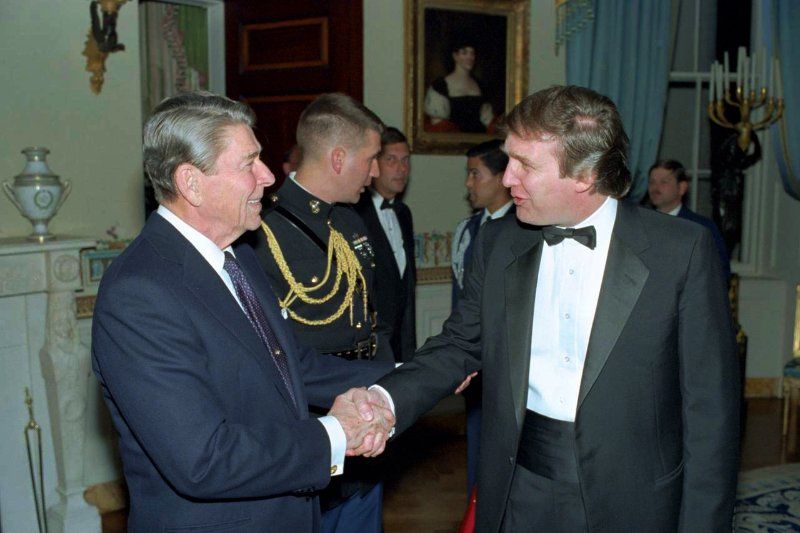
4 weeks in, Trump’s conflicting signals on Iran war frustrate GOP lawmakers and political allies (Representational Image)
License: License: Public domain
Strategic Ambiguity or Policy Paralysis? Trump’s Iran Pivot Strains Republican Unity
WASHINGTON — Four weeks into his second term, President Donald J. Trump’s Middle East policy has entered a state of volatile uncertainty. While the administration has intensified its "Maximum Pressure" rhetoric against Tehran, a series of contradictory signals regarding potential military intervention has left GOP lawmakers, Pentagon officials, and international allies struggling to discern the White House’s true "red line."
The internal friction reached a boiling point this week following a series of late-night social media posts in which the President alternated between threatening "unprecedented consequences" for Iranian naval maneuvers and simultaneously suggesting he is "not looking for war" and remains open to a "grand bargain" without preconditions. For Republican hawks who expected a more decisive military posture, the lack of a cohesive strategy is becoming a source of public frustration.
4 weeks in, Trump’s conflicting signals on Iran war frustrate GOP lawmakers and political allies (Representational Image)
License: License: Public domain
A Divided Front on Capitol Hill
The divide within the Republican party has sharpened as the administration’s first month concludes. On one side, traditional foreign policy hawks, led by influential senators, have urged the President to authorize targeted strikes against Iranian-backed infrastructure in response to recent drone provocations in the Persian Gulf. They argue that anything less than a show of force invites further aggression.Conversely, the "America First" wing of the party—bolstered by Vice President J.D. Vance’s ideological influence—is reportedly counseling the President against any escalation that could lead to a protracted ground conflict. This faction views the Iran situation through the lens of domestic priorities, fearing that a new war in the Middle East would drain resources intended for border security and industrial revitalization.
"The signals coming out of the West Wing are at cross-purposes," said one senior GOP aide, speaking on condition of anonymity. "The Pentagon is preparing for escalation while the President is talking about a sit-down in Geneva. Our allies don't know which version of U.S. policy to bank on."
Regional Allies in Limbo
The confusion is not limited to Washington. In Jerusalem and Riyadh, diplomats are reportedly seeking clarification on the administration’s stance. During his first term, Trump’s withdrawal from the JCPOA (the Iran nuclear deal) was met with praise from these regional partners. However, the current lack of a unified front has sparked concerns that the U.S. might be pivoting toward an isolationist stance that leaves regional security in a vacuum.Intelligence reports suggest that Tehran is capitalizing on this perceived indecision. Iranian officials have increased their enrichment activities over the last month, effectively testing the "red lines" the Trump administration has yet to clearly define.
The Pentagon’s Dilemma
Inside the E-Ring of the Pentagon, the frustration is palpable. Military planners require clear policy objectives to position assets effectively. Sources indicate that naval deployments in the Strait of Hormuz have been adjusted three times in the last fourteen days—moving from "offensive readiness" to "defensive posturing" and back again—following conflicting verbal directives from the Commander-in-Chief.As the administration enters its second month, the pressure is mounting for the President to deliver a formal National Security Strategy regarding Iran. Without a clear path forward, the frustration among his most loyal political allies may soon transition from private grumbling to a public break in party discipline.