
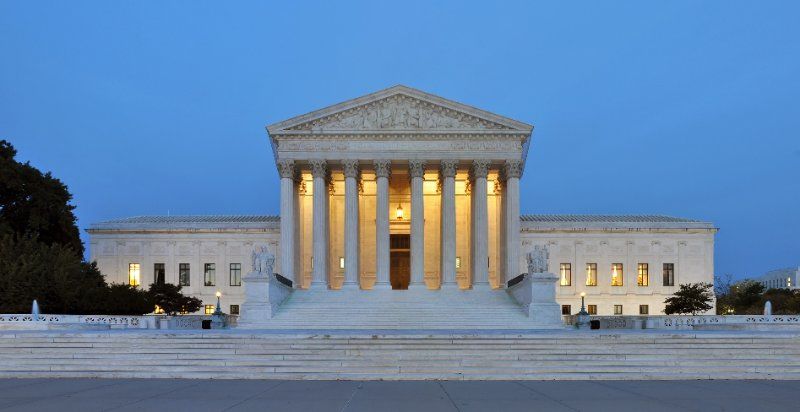
Supreme Court conservatives were united against Biden. Here’s why they split against Trump
*Supreme Court conservatives were united against Biden. Here’s why they split against Trump (Representational Image)*
# A Fractured Front: Why the Supreme Court’s Conservative Bloc Splits on Trump After Uniting Against Biden
**WASHINGTON D.C.** — Throughout the Biden administration, the Supreme Court’s 6-3 conservative supermajority often operated as a disciplined phalanx. On issues ranging from environmental regulation to student loan forgiveness and vaccine mandates, the right-leaning justices stood united in a historic effort to dismantle the "administrative state."
However, as legal challenges involving former President Donald Trump moved from the campaign trail to the marble halls of the high court, that monolithic front began to show significant fissures. While the conservative bloc remains ideologically aligned on the need to curb executive agencies, their approach to cases involving the former president reveals a complex divide between "institutionalist" jurists and "originalist" stalwarts.
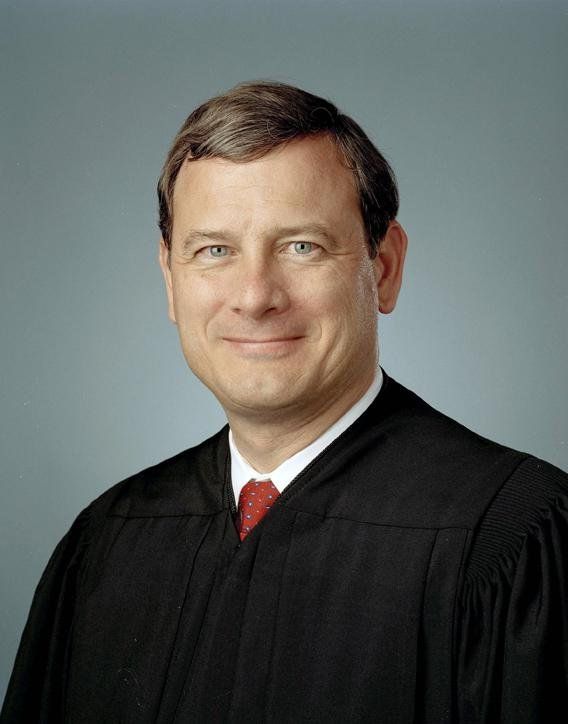
Supreme Court conservatives were united against Biden. Here’s why they split against Trump
*Supreme Court conservatives were united against Biden. Here’s why they split against Trump (Representational Image)*
### The Biden Strategy: Targeting the Administrative State
The unity observed during President Biden’s term was largely forged through the "Major Questions Doctrine." This legal theory asserts that if an executive agency seeks to decide an issue of vast economic or political significance, it must have clear authorization from Congress.
In landmark cases such as *Biden v. Nebraska* (striking down student debt relief) and *West Virginia v. EPA* (limiting carbon emission regulations), the six conservative justices—Chief Justice John Roberts and Justices Clarence Thomas, Samuel Alito, Neil Gorsuch, Brett Kavanaugh, and Amy Coney Barrett—voted as a cohesive unit. For these justices, Biden’s executive actions represented a bypass of the legislative process, providing a common target for their shared skepticism of federal bureaucracy.
### The Trump Divergence: Institutionalism vs. Absolute Power
The dynamic shifted when the court turned its attention to the legal entanglements of Donald Trump. While the court did grant a degree of presidential immunity in *Trump v. United States*, the reasoning behind the conservative votes revealed a burgeoning rift.
Legal analysts point to three primary reasons for the split:
1. **Preserving Judicial Legitimacy:** Chief Justice Roberts and Justice Kavanaugh have frequently moved to insulate the court from the appearance of partisanship. In cases involving Trump’s efforts to overturn the 2020 election or his assertions of absolute immunity, these "institutionalists" have sought middle-ground rulings that protect the office of the presidency without endorsing the individual's specific conduct.
2. **The Barrett Factor:** Justice Amy Coney Barrett has emerged as a distinct voice within the bloc. In several Trump-related rulings, she has penned solo concurrences that distance her from the more expansive views of Thomas and Alito. Barrett has shown a preference for narrow, procedural grounds rather than sweeping declarations of executive power, signaling a refusal to be part of a predictable voting bloc.
3. **Constitutional Limits vs. Political Stakes:** While the Biden cases were largely about statutory interpretation (interpreting laws passed by Congress), the Trump cases involve fundamental constitutional questions regarding Article II power and the separation of powers. This higher legal stakes environment naturally invites more varied philosophical interpretations among the conservative justices.
### A Split in Perspective
The divide was perhaps most visible in the 2024 ruling regarding Trump’s eligibility for the ballot under the 14th Amendment. While the court was technically unanimous in its result—keeping Trump on the ballot—the conservative majority split on the *scope* of the ruling. The "hard-line" conservatives wanted to shut the door on all future challenges to federal candidates, while the more moderate wing criticized their colleagues for "deciding more than the case required."
"The conservative justices are not a monolith when it comes to the person of Donald Trump," says legal scholar Elena Vovk. "They are united against the expansion of the federal bureaucracy under Biden, but they are deeply divided on how much the Court should intervene to protect or penalize a former president whose actions challenge the traditional norms of the judiciary."
As the court prepares for future dockets, this internal friction suggests that while the "conservative revolution" remains intact for policy-based litigation, the era of predictable 6-3 rulings is increasingly a thing of the past when the name "Trump" appears on the docket.